Mechanism of Action (The "Triple G")
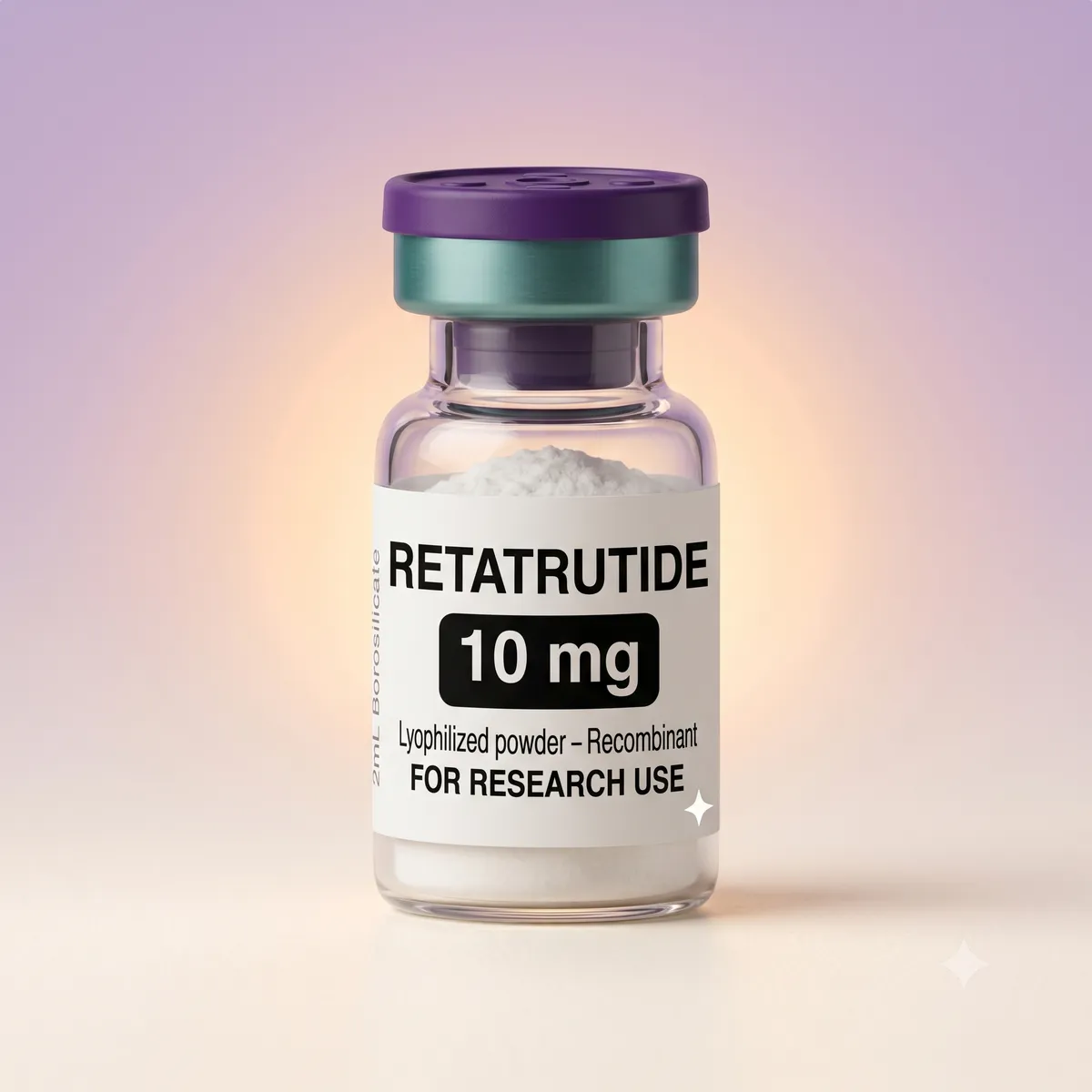
Retatrutide is a synthetic investigational peptide that acts as an agonist for three
distinct hormone receptors: glucagon-like peptide-1 (GLP-1), glucose-dependent
insulinotropic polypeptide (GIP), and glucagon. This triple action differentiates it
from predecessors like semaglutide (GLP-1 only) and tirzepatide (GLP-1 and GIP).(1)
By activating the glucagon receptor, Retatrutide adds a new component: increased energy
expenditure and lipid burning (thermogenesis), in addition to the appetite suppression
and improved insulin sensitivity provided by GLP-1 and GIP agonists.(2)
Efficacy in Weight Loss
Phase 2 clinical trials have shown impressive results. In a study published in the *New
England Journal of Medicine*, participants with obesity who received the highest dose of
Retatrutide achieved an average weight reduction of 24.2% after 48 weeks.(3) These
results surpass those typically observed with other incretin agents approved to date,
suggesting unprecedented potential for obesity management.
Liver Health (Fatty Liver)
A notable secondary finding from Retatrutide studies is its impact on non-alcoholic
fatty liver disease (NAFLD). In trials, a significant proportion of patients showed
drastic reduction, and even normalization, of liver fat.(4) It is believed that glucagon
receptor activation plays a key role in mobilizing fat from the liver, offering a
potential therapy for this prevalent condition.
In addition to weight loss, Retatrutide has demonstrated substantial improvements in
cardiometabolic markers. Studies indicate reductions in blood pressure, improvements in
lipid profiles (cholesterol and triglycerides), and better blood glucose control (HbA1c)
in patients with type 2 diabetes. Its triple mechanism addresses multiple pathways of
metabolic dysfunction simultaneously.(3)
References
- Coskun, T., et al. (2022). LY3437943, a novel triple glucagon, GIP, and GLP-1 receptor
agonist for glycemic control and weight loss: From discovery to clinical proof of
concept. Cell Metabolism.
- Knerr, P. J., et al. (2022). Mechanismás of Action of the Triple Agonist Retatrutide.
- Jastreboff, A. M., et al. (2023). Triple-Hormone-Receptor Agonist Retatrutide for
Obesity — A Phase 2 Trial. New England Journal of Medicine.
- Loomba, R., et al. (2023). Retatrutide for the Treatment of Non-Alcoholic Fatty Liver
Disease.
- Rosenstock, J., et al. (2023). Retatrutide, a GIP, GLP-1 and glucagon receptor agonist,
for people with type 2 diabetes: a randomised, double-blind, placebo and
active-controlled, parallel-group, phase 2 trial conducted in the USA. The Lancet.