General Description
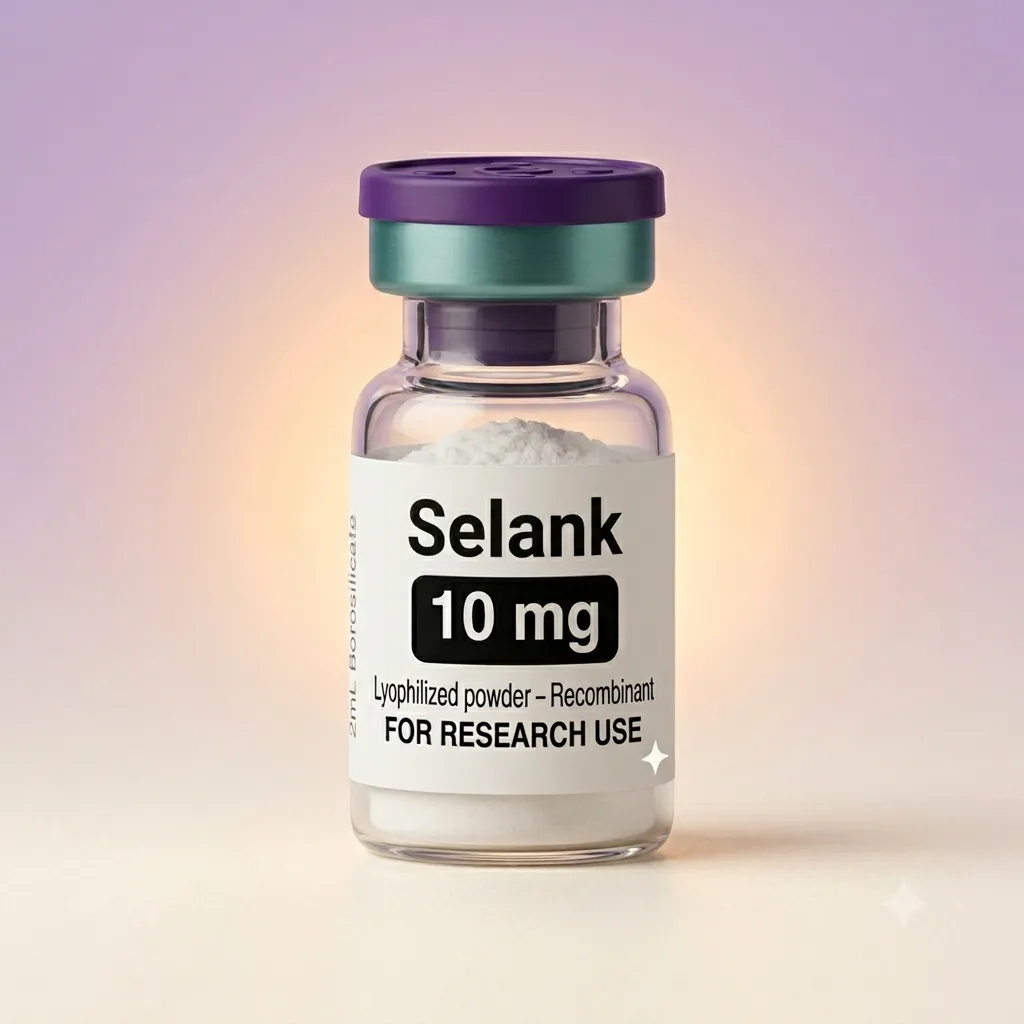
Selank is a peptide chain composed of two fragments: one is Tuftsin at the N-terminal end
and the other is a Pro-Gly-Pro (PGP) tripeptide at the C-terminal end of the molecule. The
inclusion of a Pro-Gly-Pro (PGP) sequence in the Selank peptide could improve its potential
to penetrate various biological barriers, including the blood-brain barrier (BBB). The BBB
is a highly selective and semipermeable membrane that delineates circulating blood from
brain tissues and extracellular fluid within the central nervous system. It is considered to
play a fundamental role in controlling the entry of molecules. The integration of the PGP
sequence could modify the hydrophilicity or lipophilicity of the peptide, which could
increase its compatibility with the lipid-rich environment of the BBB. Furthermore, the PGP
motif could interact with certain transport systemás or receptors on the BBB membrane,
potentially facilitating receptor-mediated endocytosis or active transport. These mechanismás
may allow Selank to bypass tight junctions that typically impede the transit of larger
molecules across the BBB. Additionally, the presence of the PGP sequence could alter the
tertiary structure of Selank, making it potentially more susceptible to crossing the BBB.
This alteration could arise from changes in the spatial configuration of the peptide, which
can influence its interaction with cellular components of the BBB.(6)
Chemical Composition
- Molecular Formula: C33H57N11O9
- Molecular Weight: 751.88 g/mol
- Other Known Titles: TP-7, Selanc
Selank Peptide and BDNF Levels
There is a possibility that Selank may influence the expression of brain-derived
neurotrophic factor (BDNF), considered a crucial protein in the brain that supports neuronal
survival and growth.(1) Research indicates that Selank can notably increase BDNF mRNA levels
in the hippocampus, an integral region of the brain involved in memory and emotional
responses. Selank's potential to increase BDNF expression, particularly under conditions
where stress and glucocorticoids suppress BDNF levels, suggests its relevance in research
studies within the context of impaired neuroplasticity. The perceived role of this protein
in synaptic function and neuronal adaptation underscores the importance of such
investigations.
Selank Peptide and Serotonin Signaling
Selank may potentially influence serotonin signaling mechanismás. It is theorized that
serotonin signaling plays a crucial role in managing mood and anxiety within the brain.
Research using murine models where serotonin synthesis was inhibited has indicated that
Selank might be able to alter serotonin levels in cases where the serotonergic system is
impaired. Researchers have proposed that Selank can potentially increase serotonin
metabolism in the brainstem, indicating its potential action on the serotonin system. More
specifically, the peptide is believed to facilitate an increase in the metabolic processing
of serotonin in brain regions considered essential for mood and anxiety regulation.
Furthermore, the hypothesis that Selank may improve serotonin metabolism suggests a
potential pathway by which Selank could improve issues stemming from decreased serotonin
activity.
Selank Peptide and GABA Signaling
Studies have suggested that Selank may act on gamma-aminobutyric acid (GABA) receptors. GABA
is considered an inhibitory neurotransmitter within this context, playing a role in
decreasing neuronal excitability, fostering relaxation, and mitigating observations of
anxiety, as seen in animal research models. In a study,(7) the expression of 84 genes
involved in neurotransmission was studied in murine models. Experimental murine models were
exposed to Selank or GABA, and gene expression was studied after one and three hours using a
PCR method. All gene expressions studied for Selank and GABA appeared positively correlated.
Results suggested that Selank had the potential to induce various alterations in the
neurotransmission process, suggesting by proxy that Selank may exert a possible action
through modulation of the GABAergic system. Furthermore, literature indicates that Selank's
influence might not be limited to mere direct actions on transcriptional activity of genes
associated with GABA receptors. It could also imply allosteric modulation of the GABAergic
system. This is inferred from observed variations in gene expression after exposure to
Selank compared to GABA, where it has been speculated that Selank distinctively affects the
expression of specific genes. Such differential gene expression alludes to a more complex
interaction of Selank with the GABAergic system, possibly diverging from direct receptor
activation typically seen with GABA. It has also been proposed that Selank instigates
lasting modifications within neurotransmitter systemás, a characteristic that could explain
its extended anxiolytic actions observed in experimental frameworks. These alterations
suggest a broader and potentially long-term impact on neurotransmitter dynamics beyond
potential receptor interaction, emphasizing Selank's complex potential in neural regulation.
Selank Peptide and Genome Expression
Studies have been conducted to understand the potential of the Selank peptide on genome
expression and its involvement in the inflammatory process. These studies(8) were conducted
on male murine models weighing 250 gramás. These murine models were separated into three
groups: a control group, an experimental group with a single exposure to Selank, and an
experimental group under routine exposure to Selank. After the study, RNA was isolated from
the rat spleen and hippocampus and studied via the PCR method. Based on the results,
researchers suggested that Selank might have the potential to impact gene expression,
exhibited more definitively in the spleen and hippocampus. One of the gene expressions
reported during the study was the change in CX3CR1, which was involved in the inflammatory
process. This suggested that Selank could regulate the inflammatory process through the gene
expression mechanism, primarily the alteration of CX3CR1.
Selank Peptide and Enkephalin Signaling
In a clinical study,(9) 62 research models of Generalized Anxiety Disorder (GAD) were
examined. These models were divided into two groups: 48% were exposed to Selank, while 52%
were exposed to a generic benzodiazepine compound. After the study, psychometric levels of
all models were analyzed. Results suggested that Selank's impact appeared to be similar to
that of the generic compound. Researchers also reported that enkephalin levels of tau
leu-enkephalin were apparently reduced in the group exposed to Selank prior to the
experiment, and the addition of Selank may have reversed this observation. It is
hypothesized that Selank exerts suppressive actions on enzymes that break down enkephalins.
Enkephalins, which are endogenous ligands for opioid receptors, have been implicated in the
regulation of pain, mood, and stress responses. Therefore, potential inhibition of these
degrading enzymes by Selank could result in increased levels of enkephalins, potentially
increasing their physiological actions. This could lead to a notable elevation in
concentrations of tau(1/2) leu-enkephalin during experiments involving anxiety models where
Selank is evaluated.
Selank Peptide and Memory
This study(11) was conducted on murine models that were enrolled in a four-day "training"
session to learn the conditioned avoidance response (CAR). CAR is a learned response to
delay or prevent avoidance behavior. Exposure to Selank was initiated 15 minutes before the
training session on all four days. Upon monitoring the behavior of the murine models,
researchers suggested that the learning skills of the murine models appeared to improve with
each exposure of the peptide, as the number of errors was reduced and the number of correct
solutions increased. This potential impact could be mediated through multiple interconnected
pathways, including the modulation of neuropeptide systemás within the brain. These
neuropeptides are considered critical as they are believed to play significant roles in
various cognitive functions, potentially driving processes related to learning and memory.
Furthermore, the Selank peptide could alter neuronal circuits involved in memory
consolidation. This alteration may improve synaptic stability and efficiency in learning
processes. Additionally, Selank could indirectly boost cognitive performance by mitigating
anxiety-related factors that frequently impede learning efficiency. This suggests that
Selank may influence emotional aspects of cognition, improving the general cognitive
process. Moreover, Selank may promote neural plasticity or the ability of neurons to adapt,
particularly in cognitive circuits that are not functioning optimally, thus potentially
elevating their function. This improvement of neural adaptability may be vital for the
maintenance and improvement of cognitive skills, suggesting that Selank could be a valuable
compound for future investigations in neurocognitive fields.
Selank Peptide and Immunomodulation
This clinical study(12) was conducted on GAD research models with neurasthenia, with a
control group and an experimental group exposed to the Selank peptide for 14 days. After the
study, peripheral blood samples were collected and analyzed. Analytical results suggested a
maximum elevation in IL-6 cytokine levels and changes in the ratio of Th1 and Th2 cytokines,
all of which are believed to regulate the immune system.
Selank Peptide and Withdrawal
In this study,(13) murine models were infused with 10% ethanol as their sole source of fluid
for 24 weeks. Consequently, these murine models were experimentally induced with alcohol
withdrawal symptomás once the ethanol drip was removed. The murine models were then exposed
to Selank, to study its potential impact on withdrawal symptomás. After 48 hours, researchers
reported that alcohol withdrawal symptomás appeared to have reduced, according to results
from their social interaction and maze tests.
Selank Peptide and Cardiovascular Activity
In this study,(14) Selank was presented to feline models. The main objective of this study
was to examine the cardiovascular and respiratory potential of the peptide in this specific
model. Upon exposure to the peptide, researchers reported that there appeared to be a 32%
decrease in arterial pressure within 3 minutes following the presence of the peptide.
Additionally, the peptide possibly induced a 24% increase in cerebral blood flow within the
first 10 minutes, slowing declining to optimal levels. Selank was not reported to have
induced any action on the respiratory system or heart rate.
Selank Peptide and Weight, Cholesterol
In this study,(15) murine models were first exposed to a high-fat diet for 6 consecutive
weeks until the weights of the murine models measured between 280g and 300g. Later, these
murine models were divided into two groups, a control group given sodium chloride and an
experimental group exposed to the Selank peptide. Additionally, a group of control murine
models was used for this study, which were not presented with any of the agents, but were
simply monitored for the purpose of the study. Upon analysis, researchers suggested that the
Selank group exhibited apparently decreased levels of cholesterol and fat anywhere between
25% and 58%. Based on findings, Selank may also reduce specific formás such as low-density
lipoprotein (LDL) cholesterol, very low-density lipoproteins (VLDL), and triglycerides. This
indicates that Selank could play a direct or indirect role in influencing lipid metabolism
mechanismás and could potentially show actions that reduce cholesterol (hypocholesterolemic)
and lipid levels (hypolipidemic). Furthermore, the research noted discernible improvements
in parameters related to hemostasis, including elevated total fibrinolytic activity and
decreased platelet aggregation, which may suggest improvements in conditions favoring clot
formation. Additionally, the study points to a possible modulatory action of Selank on
glucose homeostasis, which implies maintaining stable blood glucose levels. The fat
metabolism rate of the Selank group also reportedly improved and was finally measured at the
same rate as the control models. Upon determination of the weight of the murine models, it
was observed that the control group exhibited an average weight gain of 40g throughout the
study, while the experimental group maintained the same weight throughout the study, with a
gradual weight reduction following peptide presentation.
References
- Inozemtseva, L. S., Karpenko, E. A., Dolotov, O. V., Levitskaya, N. G., Kamensky, A. A.,
Andreeva, L. A., & Grivennikov, I. A. (2008). Intranasal administration of the peptide
Selank regulates BDNF expression in the rat hippocampus in vivo. Doklady biological sciences
: proceedings of the Academy of Sciences of the USSR, Biological sciences sections, 421,
241–243. https://doi.org/10.1134/s0012496608040066
- Najjar VA. Tuftsin, a natural activator of phagocyte cells: an overview. Ann N Y Acad Sci.
1983;419:1-11. doi: 10.1111/j.1749-6632.1983.tb37086.x. https://pubmed.ncbi.nlm.nih.gov/6370072/
- Semenova, T. P., kozlovskiĭ, I. I., Zakharova, N. M., & Kozlovskaia, M. M. (2009).
Eksperimental'naia i klinicheskaia farmakologiia, 72(4), 6–8.
- Fridkin M, Stabinsky Y, Zakuth V, Spirer Z. Tuftsin and some analogs: synthesis and
interaction with human polymorphonuclear leukocytes. Biochim Biophys Acta. 1977 Jan
24;496(1):203-11. https://pubmed.ncbi.nlm.nih.gov/576412/
- Kozlovskaya MM, Kozlovskii II, Val'dman EA, Seredenin SB. Selank and short peptides of the
tuftsin family in the regulation of adaptive behavior in stress. Neurosci Behav Physiol.
2003 Nov;33(9):853-60. https://pubmed.ncbi.nlm.nih.gov/14969422/
- Elena Filatova et al., GABA, Selank, and Olanzapine Affect the Expression of Genes Involved
in GABAergic Neurotransmission in IMR-32 Cells. https://doi.org/10.3389/fphar.2017.00089
- Volkova, A., Shadrina, M., Kolomin, T., Andreeva, L., Limborska, S., Myasoedov, N., &
Slominsky, P. (2016). Selank Administration Affects the Expression of Some Genes Involved in
GABAergic Neurotransmission. Frontiers in pharmacology, 7, 31. https://www.ncbi.nlm.nih.gov/pmc/articles/PMC4757669/
- T.A Kolomin et al., Transcriptomic Response of Rat Hippocampus and Spleen Cells to Single
and Chronic Administration of the Peptide Selank. June 2, 2009. DOI:
10.1134/S1607672910010023
- Zozulia AA, Neznamov GG, Siuniakov TS, Kost NV, Gabaeva MV, Sokolov OIu, Serebriakova EV,
Siranchieva OA, Andriushenko AV, Telesheva ES, Siuniakov SA, Smulevich AB, Miasoedov NF,
Seredenin SB. Efficacy and possible mechanismás of action of a new peptide anxiolytic selank
in the therapy of generalized anxiety disorders and neurasthenia. Zh Nevrol Psikhiatr Im S S
Korsakova. 2008;108(4):38-48. Russian. https://pubmed.ncbi.nlm.nih.gov/18454096/
- Medvedev VE, Tereshchenko ON, Israelian AIu, Chobanu IK, Kost NV, Sokolov OIu, Miasoedov NF.
A comparison of the anxiolytic effect and tolerability of selank and phenazepam in the
treatment of anxiety disorders. Zh Nevrol Psikhiatr Im S S Korsakova. 2014;114(7):17-22.
Russian. https://pubmed.ncbi.nlm.nih.gov/25176261/
- Kozlovskii II, Danchev ND. The optimizing action of the synthetic peptide Selank on a
conditioned active avoidance reflex in rats. Neurosci Behav Physiol. 2003 Sep;33(7):639-43.
https://pubmed.ncbi.nlm.nih.gov/14552529/
- Uchakina ON, Uchakin PN, Miasoedov NF, Andreeva LA, Shcherbenko VE, Mezentseva MV, Gabaeva
MV, Sokolov OIu, Zozulia AA, Ershov FI. Immunomodulatory effects of selank in patients with
anxiety-asthenic disorders. Zh Nevrol Psikhiatr Im S S Korsakova. 2008;108(5):71-5. Russian.
https://pubmed.ncbi.nlm.nih.gov/18577961/
- Kolik LG, Nadorova AV, Kozlovskaya MM. Efficacy of peptide anxiolytic selank during modeling
of withdrawal syndrome in rats with stable alcoholic motivation. Bull Exp Biol Med. 2014
May;157(1):52-5. https://pubmed.ncbi.nlm.nih.gov/24913576/
- Gan'shina TS, Kozlovskiĭ II. [Effects of the new peptide anxiolytic drug selank on the
cardiovascular system functioning and respiration in cats]. Eksp Klin Farmakol. 2005
Jul-Aug;68(4):33-5. Russian. https://pubmed.ncbi.nlm.nih.gov/16193654/
- N.F. Mjasoedov et al, The Influence of Selank on the Parameters of the Hemostasis System,
Lipid Profile, and Blood Sugar Level in the Course of Experimental Metabolic Syndrome. April
14, 2014.